
How Astronauts Exercise and Eat in Space & How it relates to YOU on Earth

- How astronauts maintain bone density and muscle mass in space
- Utilizing these principles on Earth
Dear Shawn –
Hi from the International Space Station!
Yes, we are concerned about bone density and muscle loss in microgravity. Our protocols include weight lifting, running and cycling. Weight lifting to put stress on the lower body mainly. There are upper body exercises we do, but that isn’t really needed medically. It is just to keep muscle strength if you are going to do a spacewalk for example.
ARED, advanced resistive exercise device is a weight lifting machine that uses vacuum to create a weight on a bar or a cable. Then we do squats, deadlifts, heel raises, rdls, rows, bench, and even situps.
We have a treadmill that also helps with loading the lower body with the impact. We can adjust our load by how much the bungees are stretched to hold one’s harness and one left down to the treadmill. We do interval work to get the heart rate up and exercise that muscle.
We also have a cycle which just needs to have your shoes clipped in. We have exercise protocols on it which do intervals or sustained wattage loads to get the heartrate up.
I personally lift every day and alternate running and cycling every other day.
Nutrition is also a part of the equation and we have recommended calories and protein amounts. We log our food as well. I have placed an emphasis on fish and nuts.
That is a quick summary. Lots to talk about there.
Thanks for being interested – now work on Dan!
sunni
Strategies to Maximize Bone Health and Muscle Mass
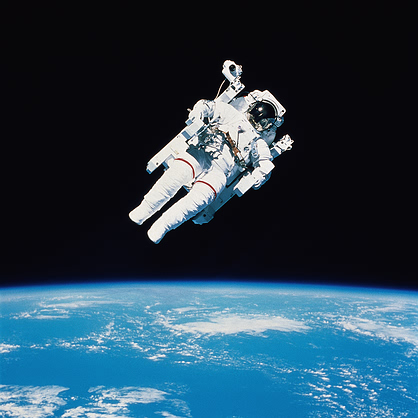
Astronauts can lose approximately 15% overall muscle mass throughout a long mission and up to 30% of their lower-body muscle mass. Unfortunately, Osteo (bone) and Sarco (muscle) penia are prevalent here on Earth, costing the medical system billions of dollars in management/ treatment every year.
Much like astronauts, physically loading our muscular and skeletal system, is essential to proactively negate the aging process.
Things to consider:
- Functionally focused, weight bearing exercises for lower extremity, core, and upper extremity
- Emphasize eccentric loading ( muscle contractions while lengthening) movements to maximize force production ( 20-60% more force produced vs concentric movements)
- 3-4 sets of 5 exercises for each body area
- Most importantly, you should be tired by the end of 10 repetitions on each exercise! This means that we are adequately loading our bones/ muscles to get a desired training stimulus.
Learn More From Us!
- Have questions? We're happy to help! Shoot us an email at ptprogressionma@gmail.com
- Rather call? We're happy to chat over the phone at (508) 650-1984