
Bright Ideas for the Darkest Days

- Light Therapy: How a few minutes of daily light can support mood and energy during the winter.
- Another construction update!
Bright Ideas for the Darkest Days
Why light matters more than you think right now.
Winter has a way of quietly draining energy. The days are shorter, mornings are darker, and motivation can slip even when routines stay the same. Recently, while reviewing research on light based therapies, we came across a 2024 JAMA Psychiatry meta analysis that stopped us in our tracks.
The finding was simple and powerful. Bright light therapy significantly improved outcomes in people with depressive disorders, even when those conditions were not seasonal. In the study, people who used a 10,000 lux light box for 30 minutes a day saw remission rates of over 40 percent.
That is a meaningful effect from something that is low risk, affordable, and easy to implement.
Menegaz de Almeida A, et al. Bright Light Therapy for Nonseasonal Depressive Disorders: A Systematic Review and Meta-Analysis. JAMA Psychiatry. Published online October 02, 2024. doi:10.1001/jamapsychiatry.2024.2871
Why light works
This research aligns closely with ideas many of you may have heard from Andrew Huberman, the Stanford neuroscientist behind the Huberman Lab podcast. One of his core messages is that light exposure early in the day is one of the strongest signals you can give your brain.
Light helps set your internal clock. That clock influences sleep quality, alertness, mood, metabolism, and even how well you recover from training. When light exposure is inconsistent or delayed, everything downstream starts to drift.
In one of Huberman’s more technical conversations, he interviews chronobiologist Dr Samer Hattar, whose work helped uncover how specialized retinal cells communicate directly with the brain’s master clock. The takeaway is not complicated. Light is the anchor. When it is missing, the system struggles to stay calibrated.
What to actually do
You do not need to overthink this. Consistency matters more than precision.
Aim to get bright light exposure within the first hour of waking.
- Sunny day: 5 to 10 minutes outside
- Cloudy day: 10 to 20 minutes
- Very overcast day: up to 30 minutes
- Light therapy lamp (10,000 lux): about 30 minutes
Sunlight is always best, but during winter mornings, a quality light lamp is a very reasonable backup.
Several of us here have dusted off old light boxes that had been sitting unused. Turning them on before sunrise has made mornings feel more manageable and energy more stable. The science supports that experience.
Check out this episode of Huberman Lab with Dr. Hattar, particularly for the tips on jet lag, sleep, and science-based motivation to get outdoors as much as possible even through these cold dark months.
The PT Progression perspective
At PT Progression, we spend a lot of time talking about movement, strength, and recovery. But those things do not exist in isolation. Sleep, mood, and daily energy all influence how well your body adapts.
Bright light will not replace training, manual therapy, or good programming. But it supports all of them. Better sleep improves recovery. Better mood improves consistency. Better consistency leads to better long term outcomes.
That is what we mean when we say treat the cause, not just the symptoms.
One last note
One of our longtime clients recently shared a short holiday film that reminded us how small moments can still cut through the noise and stress of this season. If you need something simple and uplifting during these darker weeks, it is worth a few minutes of your time.
Find Your Purpose- Kettlebell Commercial
Thank you for continuing to show up for your health and for trusting PT Progression along the way. We are grateful for this community and excited to keep moving forward together.

Construction Update!
A Small Detail With a Meaningful Story
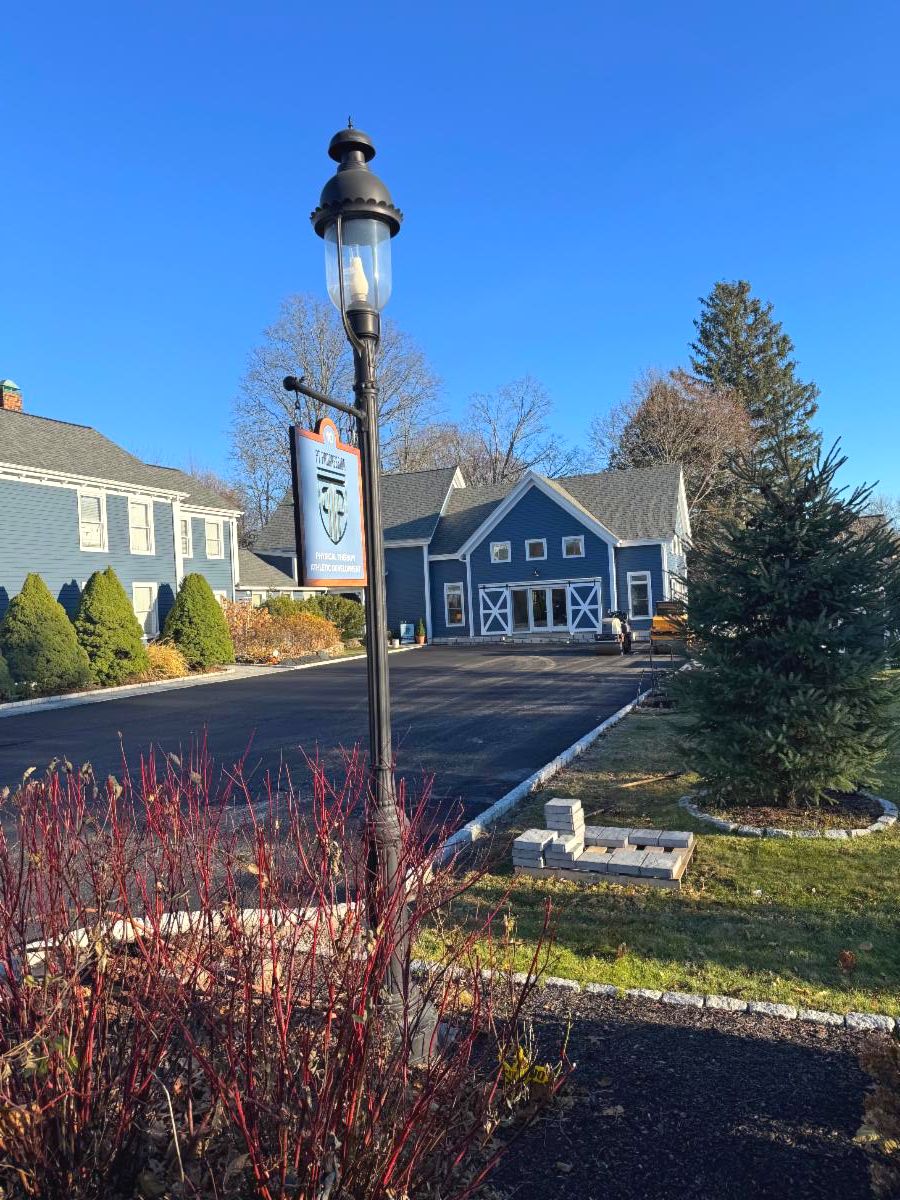
As we wrap up the very last piece of construction at PT Progression, we are installing our handicap access ramp. It is a practical update, but it also got us thinking about the history behind the word handicap itself.
The term is believed to trace back to post war periods, when injured veterans returned home with physical limitations and very few resources. Some relied on public charity, holding out a cap with their hand inside it while asking for help. Over time, hand in cap evolved into the word we still use today.
Hmm... that is interesting. And a little sobering.
The original meaning had nothing to do with ability or potential. It described circumstance. People adapting to changed bodies and trying to participate in everyday life again.
That is exactly why this final construction detail matters to us. Accessibility is not an afterthought. It is part of creating a space where everyone can walk in, train, rehabilitate, and progress with dignity.
At PT Progression, injury or limitation is never the end of the story. It is simply where we begin.
Learn More From Us!
- Have questions? We're happy to help! Shoot us an email at ptprogressionma@gmail.com
- Rather call? We're happy to chat over the phone at (508) 650-1984