
Making Progress During a Setback and Optimizing Salt Levels

- 1) How We Keep Our Clients Progressing Towards Their Goals During a Setback: Setbacks happen, but that doesn't always mean they should stop your progress.
- 2) Optimal Salt Levels for Health and Performance: Find out if you should consider adding more salt to your diet.
In this edition, in 10 minutes or less, we will cover:
1) How We Keep Our Clients Progressing Towards Their Goals During a Setback: Setbacks happen, but that doesn't always mean they should stop your progress.
2) Optimal Salt Levels for Health and Performance: Find out if you should consider adding more salt to your diet.
How We Keep Our Clients Progressing Towards Their Goals During a Setback
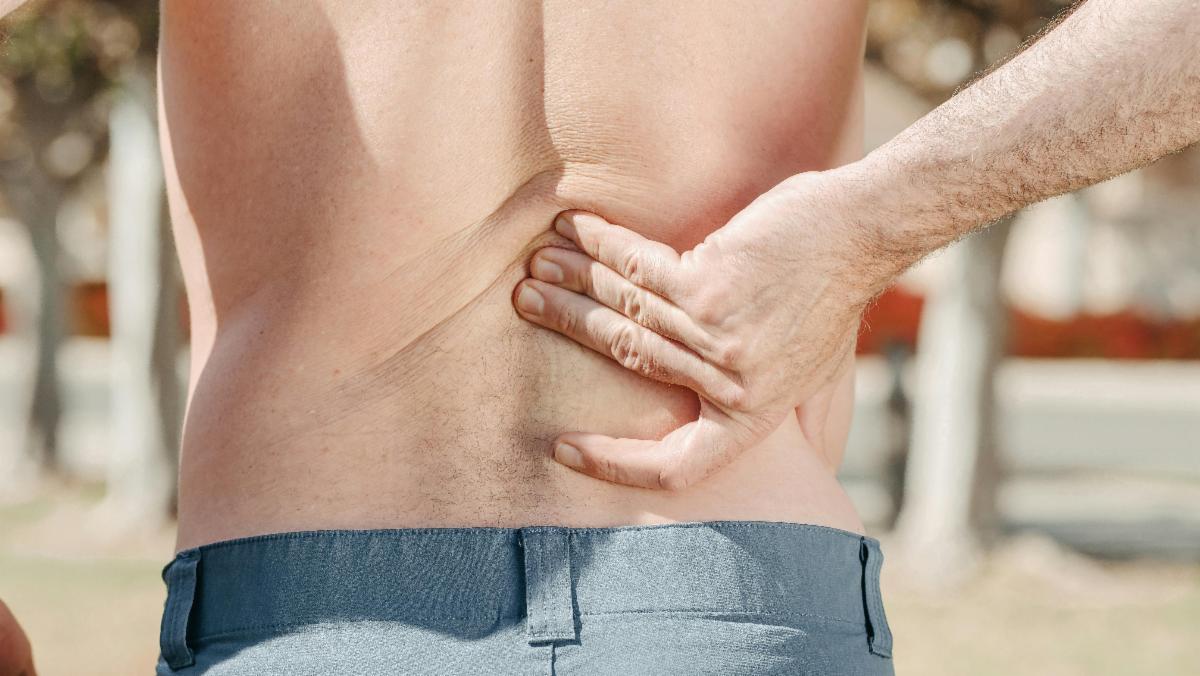
A couple weeks ago, I received this text from my client:
“Wrecked my back last weekend. Still trying to stand straight.”
Ugh. Never something you want to hear. Here’s a little context about my client: he’s an active guy in his 60’s. He likes to keep busy and work on things around his house. He’s dealt with low back pain in the past but hasn’t experienced any symptoms in a while. While moving some things at home, he turned and tweaked his back.
When I saw him for his next visit, he was still experiencing some pain. He was walking normally but moving gingerly to protect his back.
His program had been focused on increasing range of motion through his spine and hips, building and maintaining muscle, and improving his conditioning. We could continue to do that, however we’d have to modify things due to his back.
A big part of our philosophy at PT PROGRESSION is adaptability. We understand that circumstances can change from session to session. We take those things into consideration during each session and adapt our programs accordingly.
For my client, that meant adding in more hands-on techniques, changing his warm-up, and reducing the number of sets of his exercises.
Here’s more context about my client: he has high expectations for himself. He prides himself on working hard and pushing himself during our sessions. But this wasn’t going to be one of those days.
As he finished his last sled push, he looked at me and said, “Slow motion.”
I responded, “Slow motion is better than no motion.”
While he didn’t see it this way at first, his session was a huge victory. He completed it without irritating his back, felt better afterwards, and most importantly, still made progress towards his goals.
Here’s even more context about my client: before I met him, he experienced debilitating low back pain. I’m talking bedridden. For days.
Since we started working together, his body has become more physically resilient. He’s been able to tolerate more activities and has remained injury-free.
When you use your body and push yourself like my client does in his spare time, things like this can happen. However, if he hadn’t built up his resiliency, I’m confident that this episode would have been much worse. It ended up being a minor speed bump; it slowed him down slightly, but he kept moving forward.
As you get more active this spring, what are you doing to increase your resiliency?
Optimal Salt Levels for Health and Performance
Today I want to provide a quick take on proper hydration and electrolyte supplementation. The human body can appear to tolerate a wide range of hydration and electrolyte intake. However, if we’re looking to optimize function, health, and performance, we need to make adequate intake a priority.
Inadequate hydration can negatively affect health, physical and mental performance including decreased endurance, fatigue, and anxiety, as well as altered nerve and muscular function. Optimal water intake is pretty simple - roughly 2.2-3.5L for most healthy adults, and slightly more with activity. Optimal salt intake, however, is a more nuanced topic.
It’s widely acknowledged that a high salt (specifically sodium) diet is bad for cardiovascular health. However, some recent data suggest the safe range recommended by the World Health Organization (WHO), <2g/day, may be too low. A recent JAMA study suggests a range closer to 1.5 to 2x this number is safe and it’s not until 3.5x this level that cardiovascular risk appears to increase.
Studies that inform the WHO recommendation may be off the mark, considering that a high sodium diet is likely to also be highly processed or high in carbohydrates and fats. Those who eat diets low in salty, processed foods or use intermittent fasting/low carbohydrate/ketogenic diets may actually be undershooting their optimal hydration and may benefit from supplemental electrolytes.
This could be an electrolyte drink or even simply adding some salt to water or food. Keep in mind, this is all assuming normal cardiovascular health. Those who have pre-hypertension, hypertension, or other cardiovascular disease need to keep a closer eye on their salt intake and how it affects their blood pressure.
This is a complex, nuanced topic and the truth is that every individual is different and should be making their own decisions regarding their health - we’re just here as a resource to help guide and inform those decisions. Please reach out if anyone would like to discuss further!
P.S. We are excited to be offering complimentary samples of LMNT electrolyte mix. Grab one at your next visit and let us know what you think!