
Understanding Different Types of Pain
Understanding Different Types of Pain: Nociceptive, Referred, and Radicular Pain
In this post, we're diving into a topic we get asked about a lot: pain. But not just any pain; we're talking about the different types of pain you might experience and what they really mean. Understanding the difference between referred pain, nociceptive pain, and radicular pain can be a game-changer in your recovery journey. So, let's get into it and clear up any confusion!
1) Nociceptive Pain: This is the most common type of pain, typically resulting from tissue damage or inflammation. It's the body's natural response to injury or harmful stimuli. Examples include the sharp pain from a cut or the aching from arthritis. Nociceptive pain is often localized to the area of injury and can be acute or chronic.
Trigger point: A type of nociceptive pain, this is a localized hyperirritability in muscle tissue, often accompanied by tight bands of tissue that are very painful to palpate. “Active” trigger points can refer pain to other areas of the body, usually feeling like a deep ache. Common areas we see this are in the Upper Trapezius and Levator Scapulae. These often resemble headache or back-of-neck referred patterns.
2) Referred Pain: Referred pain occurs when pain is perceived at a location other than the site of the injury. This happens because sensory nerves from different parts of the body converge on the same neural pathways in the spinal cord. A classic example is shoulder/left arm pain stemming from a heart attack, where the pain is felt in the shoulder or arm despite the heart being the source of the problem. However, we commonly see this with joint, cartilage, and other soft tissues in the body.
3) Radicular Pain: This type of pain is caused by irritation or compression of a spinal nerve root, often due to conditions like a herniated disc or spinal stenosis. Radicular pain typically radiates along the path of the affected nerve, resulting in a sharp, shooting pain that travels down the leg or arm. It is often associated with numbness, tingling, or weakness in the affected area and is reproducible and specific to the nerve involved.
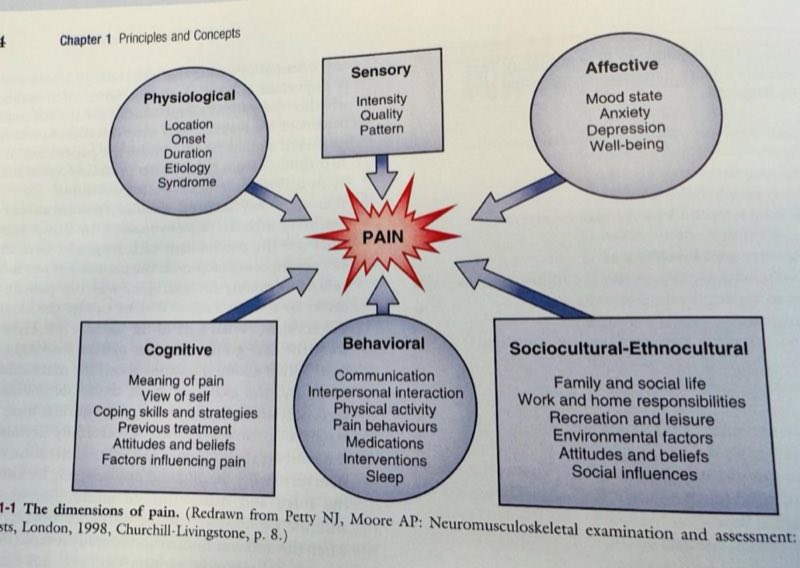
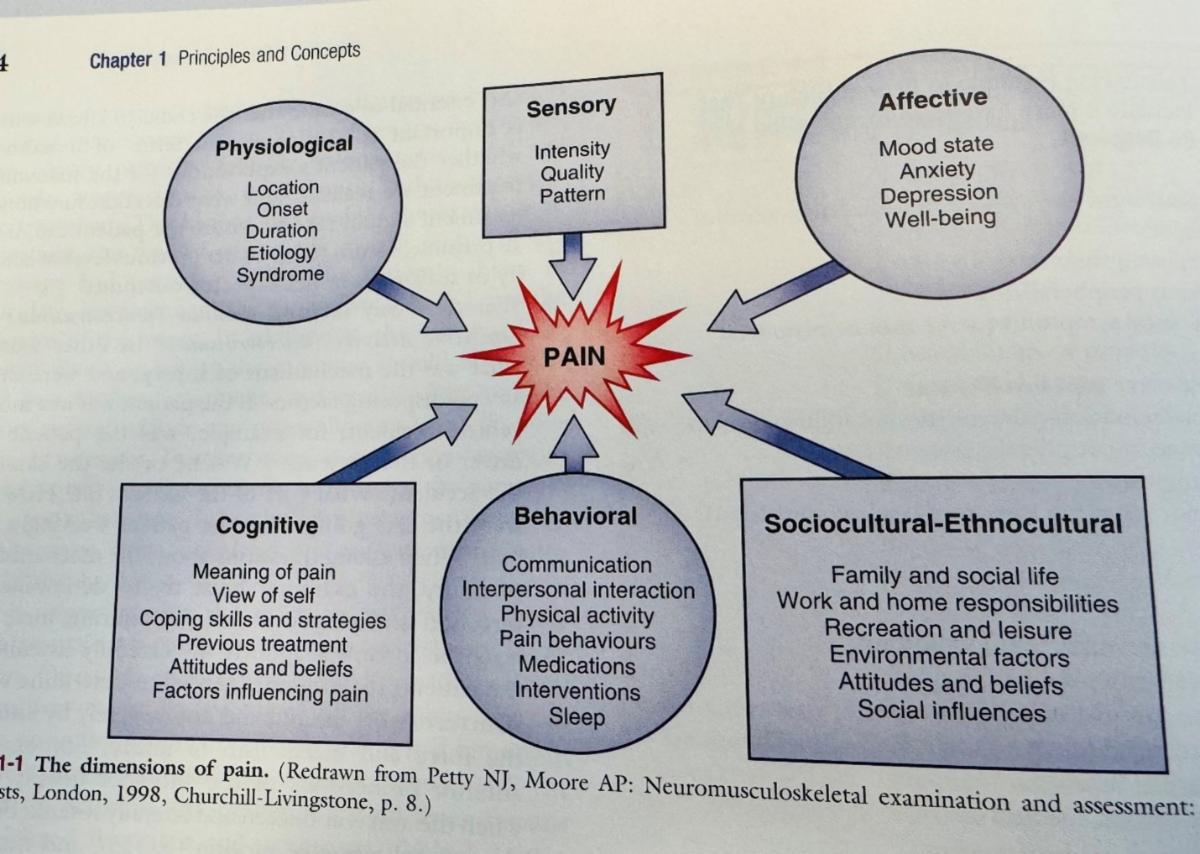
We'd be remiss if we didn’t point out that ALL pain is 100% derived from your brain’s perception of the tissue damage. Everyone does not experience pain in the same way and is heavily influenced by the factors in the diagram shown above. Understanding the interrelationship between all of these factors can make a huge difference in getting back to the active life you want to live without pain.
Questions? We'd love to keep the chat going.
References:
- Magee, D. J. (2014). Orthopedic physical assessment (6th ed.). Elsevier. (page 4)
Learn More From Us!
- Have questions? We're happy to help! Shoot us an email at ptprogressionma@gmail.com
- Rather call? We're happy to chat over the phone at (508) 650-1984